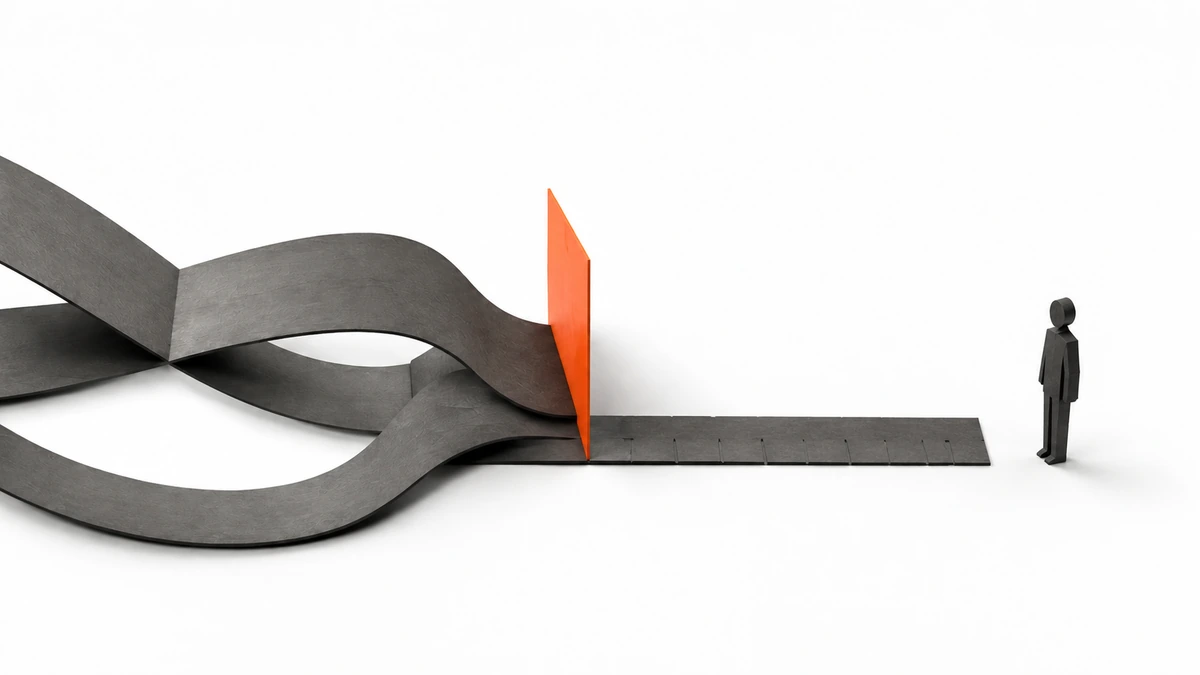
Each new capability arrives with a small, seductive promise: this part, too, you no longer have to do yourself. And each time, the honest answer is more interesting than yes or no. The real question is not whether a machine can take a thing off our hands, but whether we should let it, and what we lose in the handing over.
It is a question as old as the lever and the loom, and it does not get easier with better tools. It gets sharper. The more a system can do, the more deliberate we have to be about what we ask it to do, because the cost of drifting is no longer a slower afternoon. It is a slow erosion of the things that made the work worth doing.
The boundary always moves
It is a mistake to look for a fixed line, some permanent list of tasks that belong to people and tasks that belong to machines. There has never been such a list. Calculation was once a deeply human craft; now we hand it over without a thought, and we are not poorer for it. The boundary is not a wall. It is a tide, and it comes in.
What endures is not the location of the line but the act of drawing it on purpose. The danger has never been that machines take too much. It is that we give it away absent-mindedly, one convenient default at a time, until one day we notice that something we cared about is being done by something that cannot care.
Automation is not the enemy of meaning. Inattention is. The tool only ever takes what we forget to keep.
Three things that resist delegation
Across very different kinds of work, the same three things keep belonging to people, not for sentimental reasons, but because handing them over quietly breaks something.
- 01Accountability. A system can produce a decision, but it cannot answer for one. Someone has to be able to stand behind the outcome, and that someone must be a person.
- 02Care. Some interactions are valuable precisely because a human chose to show up for them. Automate the appearance of care and you do not save it, you counterfeit it.
- 03Irreversible judgment. When a choice cannot be undone, the deliberation is the point. Speeding it up does not help anyone; it only removes the friction that was protecting them.
Keeping the hard parts on purpose
Good automation is not the maximum amount of automation. It is the amount that frees people to spend more of themselves on the parts that need a self. The aim is not a workplace with the humans removed; it is a workplace where the humans are doing the things only humans can, and are no longer buried under the things they never should have been doing.
Whatever the technology becomes, that calibration will still be ours to make. Drawing the line will never be automated, because deciding what we owe each other is not a task. It is what the tasks were always in service of.